Every religion has a story about how it began. For Buddhism, that story starts with one man who gave up a life of luxury in search of answers to life's biggest questions.
Every year, Buddhists around the world celebrate Dharma Day, also known as Asalha Puja, which falls on the full moon of the eighth lunar month. In 2026, it is celebrated on 29 July. The festival remembers the day that Siddhartha Gautama, later known as the Buddha, delivered his very first sermon. That single speech introduced ideas that would eventually spread across the world and inspire around 500 million people.
But who was the Buddha, and why is his first sermon remembered more than 2,500 years later?
A Prince with Everything
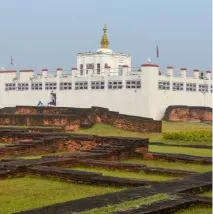
Siddhartha Gautama was born around the 6th century BC, traditionally around 563 BC, in Lumbini, in what is now modern-day Nepal. He was born into a wealthy royal family and, according to Buddhist tradition, wise men predicted that he would either become a great king or a great spiritual teacher.
His father, King Śuddhodana, hoped his son would become a powerful ruler, so he protected Siddhartha from anything that might make him question his privileged life. Growing up in luxurious palaces, Siddhartha was surrounded by fine clothes, music, delicious food, and entertainment. He later married Princess Yasodhara, and together they had a son named Rahula.
To many people, it seemed he had everything he could ever want. Yet deep down, Siddhartha believed there must be more to life than wealth and comfort.
The Four Sights
Everything changed when Siddhartha left the palace and explored the outside world.
According to Buddhist tradition, on four separate journeys he encountered sights he had never been allowed to see before.
First, he saw an elderly man, bent over with age. Then he met a man suffering from illness. Next, he came across a funeral procession, where he realised that death was an unavoidable part of life. Finally, he met a wandering holy man, or ascetic, who appeared calm despite owning very little.
These experiences became known as The Four Sights.
For the first time, Siddhartha understood that everyone experiences old age, sickness, and death, regardless of how rich or powerful they are. He began asking himself an important question.
Why do people suffer, and is there a way to overcome it?
The Great Renunciation
At around 29 years old, Siddhartha made an extraordinary decision.
Leaving behind his palace, his wealth, his wife, and his young son, he set out to search for the truth about life. This event is known as The Great Renunciation, and it marks the beginning of his spiritual journey.
For the next six years, Siddhartha travelled across northern India, learning from respected teachers and holy men. He practised deep meditation and lived as an ascetic, believing that denying himself comfort would bring wisdom.
According to Buddhist tradition, he became so weak from fasting that his ribs could clearly be seen. However, despite his determination, he realised that extreme suffering did not provide the answers he was seeking.
Instead, he concluded that neither luxury nor hardship was the key to happiness. This became one of Buddhism's most important ideas, known as The Middle Way, a balanced approach to life that avoids both extremes.
Enlightenment Beneath the Bodhi Tree
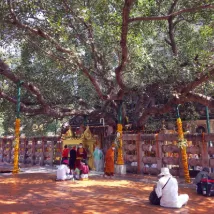
Around the age of 35, Siddhartha arrived at Bodh Gaya in northern India and sat beneath a fig tree, now known as the Bodhi Tree.
He vowed not to leave until he had discovered the truth.
According to Buddhist tradition, he meditated throughout the night while facing many temptations from Mara, a figure who represents fear, desire, and distraction. Mara tried to prevent Siddhartha from succeeding, but he remained calm and focused.
By dawn, Siddhartha had achieved Enlightenment, gaining a deep understanding of the causes of suffering and how it could be overcome.
From that moment on, he became known as the Buddha, meaning "The Awakened One."
Today, descendants of the original Bodhi Tree are still carefully protected, and pilgrims from around the world visit Bodh Gaya to reflect at the place where this remarkable moment is believed to have taken place.
A Journey That Changed History
Although the Buddha had found the answers he was searching for, he did not begin teaching immediately. According to Buddhist tradition, he spent around seven weeks reflecting on whether other people would understand such profound ideas.
Eventually, compassion convinced him to share his discoveries.
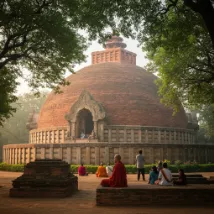
The Buddha walked approximately 250 kilometres, or 155 miles, to Deer Park at Sarnath, near the ancient city of Varanasi. There he found five ascetics who had once practised alongside him before abandoning him when he gave up extreme fasting.
At first, they were reluctant to listen because they believed Siddhartha had failed in his search.
However, when they saw how peaceful and confident he had become, they realised something had changed.
They agreed to hear what he had to say.
The First Sermon
The Buddha's first sermon is known as the Dhammacakkappavattana Sutta, meaning "Setting the Wheel of Dharma in Motion." It is this important event that Buddhists remember each year during Dharma Day.
According to Buddhist tradition, the Buddha taught that people should avoid two extremes. One is a life focused only on pleasure, luxury, and material possessions. The other is a life of severe self denial and unnecessary suffering. Instead, he encouraged people to follow The Middle Way, a balanced approach that helps people develop wisdom, kindness, and inner peace.
The Buddha explained that much of life's suffering comes from craving, attachment, and ignorance. By understanding these causes, he believed people could free themselves from suffering and find lasting happiness.
These ideas became known as the Four Noble Truths, which remain at the heart of Buddhism today.
The First Noble Truth teaches that suffering is a natural part of life. Everyone experiences challenges such as illness, disappointment, ageing, and eventually death.
The Second Noble Truth explains that suffering is often caused by craving, attachment, and always wanting more than we have.
The Third Noble Truth teaches that suffering can be overcome by letting go of these attachments and learning to live with greater understanding and acceptance.
The Fourth Noble Truth shows that there is a way to achieve this by following the Noble Eightfold Path, a practical guide to living wisely, acting kindly, speaking truthfully, and developing mindfulness through meditation.
The Buddha then explained the Noble Eightfold Path in greater detail. It encourages people to think carefully about their actions, treat others with kindness and respect, earn an honest living, and develop self discipline. It also teaches the importance of mindfulness and meditation, helping Buddhists train their minds, deepen their understanding, and find inner peace.
These teachings became the foundation of Buddhism and continue to guide around 500 million people around the world today.
The Beginning of Buddhism
Among those listening was one of the five ascetics, Koṇḍañña, who fully understood the Buddha's message.
He became the Buddha's first disciple and the first Buddhist monk, marking the beginning of the Sangha, the first Buddhist community dedicated to learning and sharing the Buddha's teachings.
From this small group gathered in Deer Park, Buddhism gradually spread throughout India before reaching countries across Asia and eventually the rest of the world.
Today, Buddhism is practised in countries including Thailand, Sri Lanka, Myanmar, Cambodia, Laos, Japan, China, South Korea, Vietnam, and many others.
Why Do Buddhists Celebrate Dharma Day?
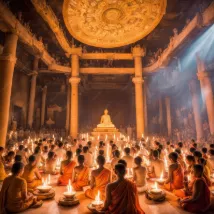
Every year, Buddhists celebrate Dharma Day, also known as Asalha Puja, to remember the Buddha's first sermon and the beginning of the Sangha.
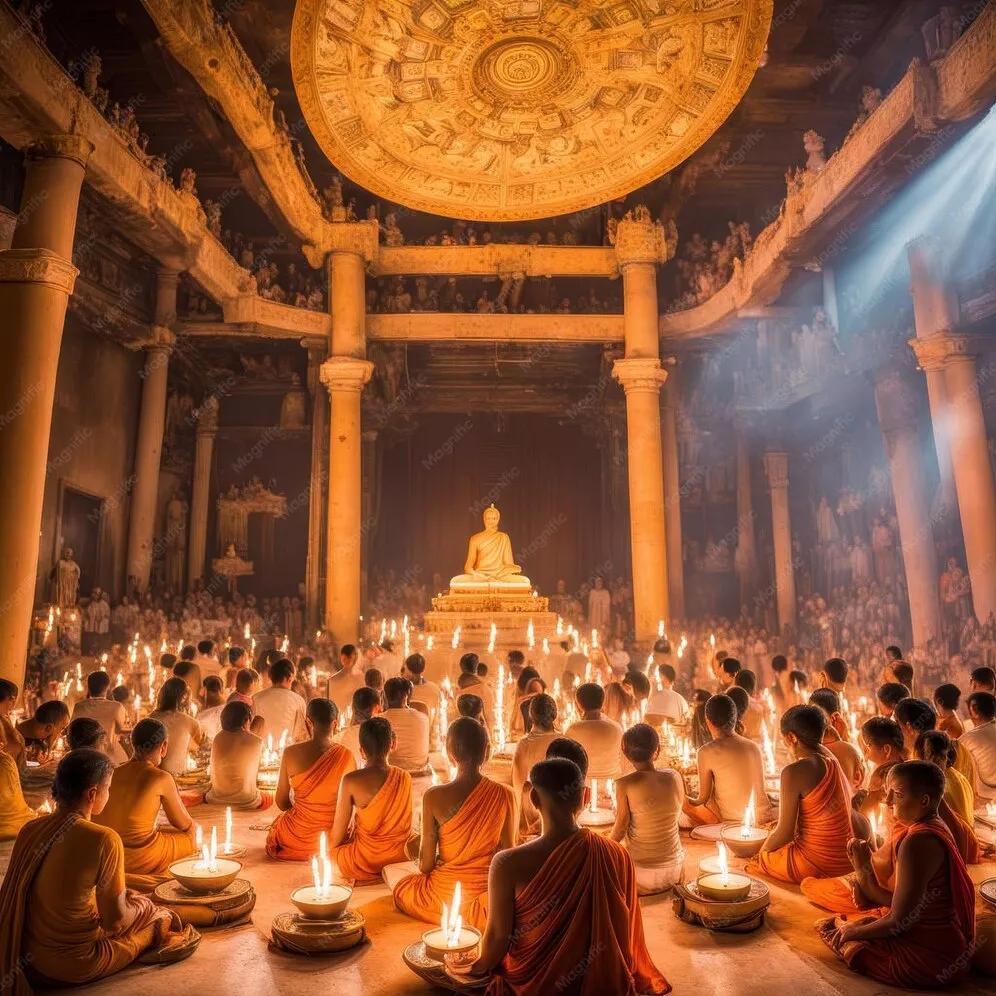
Many Buddhists visit temples, listen to monks teach the Dharma, meditate, make offerings, give to charity, and reflect on how they can live more compassionate and mindful lives.
For many, the day is not simply about remembering the past. It is an opportunity to apply the Buddha's teachings to everyday life by showing kindness, patience, generosity, and respect for others.
Why Does This Story Matter Today?
The story of the Buddha is more than just the beginning of a religion. It is the story of someone who chose curiosity over comfort, asked difficult questions about life, and dedicated himself to helping others.
His first sermon, delivered more than 2,500 years ago, continues to influence around 500 million people across the world. The ideas of balance, compassion, mindfulness, and understanding remain just as meaningful today as they were in ancient India.
Whether studying religion, philosophy, or history, Dharma Day reminds us that sometimes one journey, one conversation, or even one speech can change the world forever.